A mountain railway begins with a negotiation: how much height can a train gain, how tightly can it turn, and what must be tunneled beneath rather than crossed? The most compelling routes make those decisions visible. A looping alignment is not decorative. A rack between the running rails is not simply a historical curiosity. Each answers a physical problem, and learning to recognize the answer makes the journey richer.
Three useful examples are the Bernina railway between Switzerland and Italy, India’s Darjeeling Himalayan Railway, and Switzerland’s Jungfrau Railway. They are not interchangeable experiences. One crosses an Alpine watershed, another winds through settled Himalayan foothills, and the third climbs toward a high-altitude destination through extensive tunnels. Their differences are precisely what make comparison worthwhile.
Bernina: gaining height without a rack
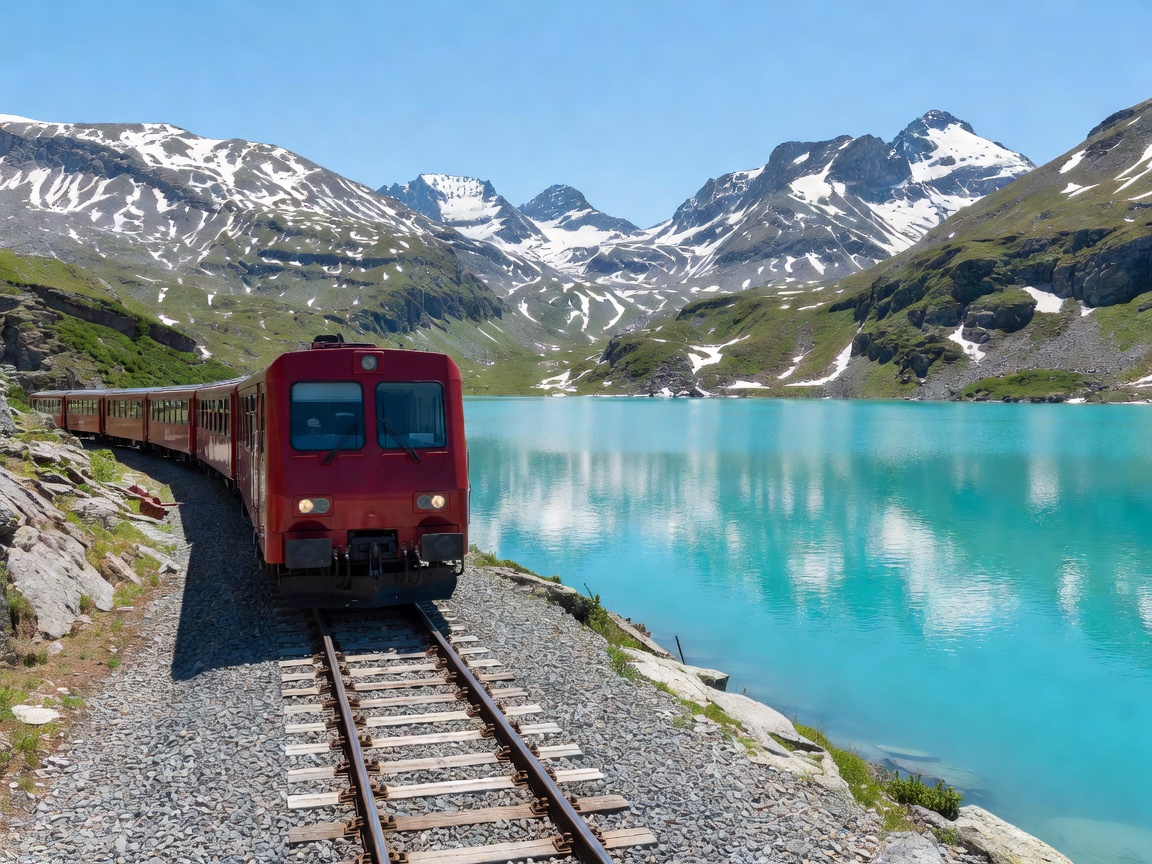
The Bernina line links St. Moritz and Tirano through the Bernina Pass region. It is a meter-gauge adhesion railway: traction comes from the contact between wheels and rails rather than from a toothed rack. Near Ospizio Bernina, the railway reaches roughly 2,253 meters above sea level. Lago Bianco, exposed rock and broad slopes replace the enclosed feeling of the valleys below.
At Brusio, the celebrated spiral viaduct gains height by extending the railway’s path through a complete curve. Look at the structure as a solution rather than only a landmark. Along with the Albula line, the Bernina route forms the UNESCO-listed Rhaetian Railway in the Albula / Bernina Landscapes. The designation concerns a railway landscape, not just one bridge or a particular branded train.
- Route
- St. Moritz–Tirano
- Engineering
- Adhesion, curves, spiral viaduct
- Travel distinction
- Regional trains and Bernina Express products differ
For planning, separate the infrastructure from the service. The Bernina Express is a branded panoramic experience; regional trains also use this railway. A journey from Chur may include the Albula route before reaching the Bernina line. Check the exact departure, reservation rules and any connections rather than assuming every service follows an identical pattern.
Darjeeling: height gained in intimate increments
The Darjeeling Himalayan Railway connects New Jalpaiguri with Darjeeling on a narrow-gauge alignment through the foothills. Its small scale brings it close to everyday life: roads, shops and hillside settlements can sit immediately beside the track. Loops and reverses are central to its engineering vocabulary, allowing the railway to gain elevation within difficult terrain.
Batasia Loop is a clear place to understand that logic, while Ghum places the line high in the mountain environment. The railway is part of the UNESCO Mountain Railways of India listing. However, a short visitor excursion and a longer journey on the route are different propositions. Steam or diesel traction, the distance covered and operating availability must be checked for the particular service being considered.
Jungfrau: a railway with a summitward purpose
The Jungfrau Railway runs from Kleine Scheidegg to Jungfraujoch, using rack traction and passing through the Eiger and Mönch. The destination station is at approximately 3,454 meters. Unlike an open mountain traverse, much of this journey happens inside the mountain; its drama is partly the contrast between enclosed ascent and the high-altitude environment at the end.
That distinction matters when expectations are shaped by photographs. A high destination does not mean continuous outdoor scenery from the carriage. Weather can obscure the surrounding peaks, and altitude can affect visitors even on a short stay. Anyone with relevant health concerns should seek qualified medical advice and consult official visitor guidance before traveling.
Choose the kind of mountain encounter
First decide whether you want an open traverse, a close encounter with a living railway landscape, or a destination reached by steep ascent. Then check the current timetable, accessibility information and reservation conditions. Allow margin around important onward connections: mountain operations are exposed to weather and infrastructure constraints. The best choice is often the route whose engineering and rhythm interest you, not simply the one with the highest station.
| Railway | Landscape relationship | Check before booking |
|---|---|---|
| Bernina | Open Alpine crossing and valley descent | Train type and seat reservation |
| Darjeeling Himalayan Railway | Foothill settlements, loops and reverses | Operating section and traction |
| Jungfrau | Rack ascent with substantial tunnel travel | Weather, altitude and access arrangements |
Continue with reliable sources
Use Rhaetian Railway, Jungfrau Railways and IRCTC for current travel information. The Rhaetian Railway UNESCO entry and Mountain Railways of India entry provide heritage context, not ticket availability.