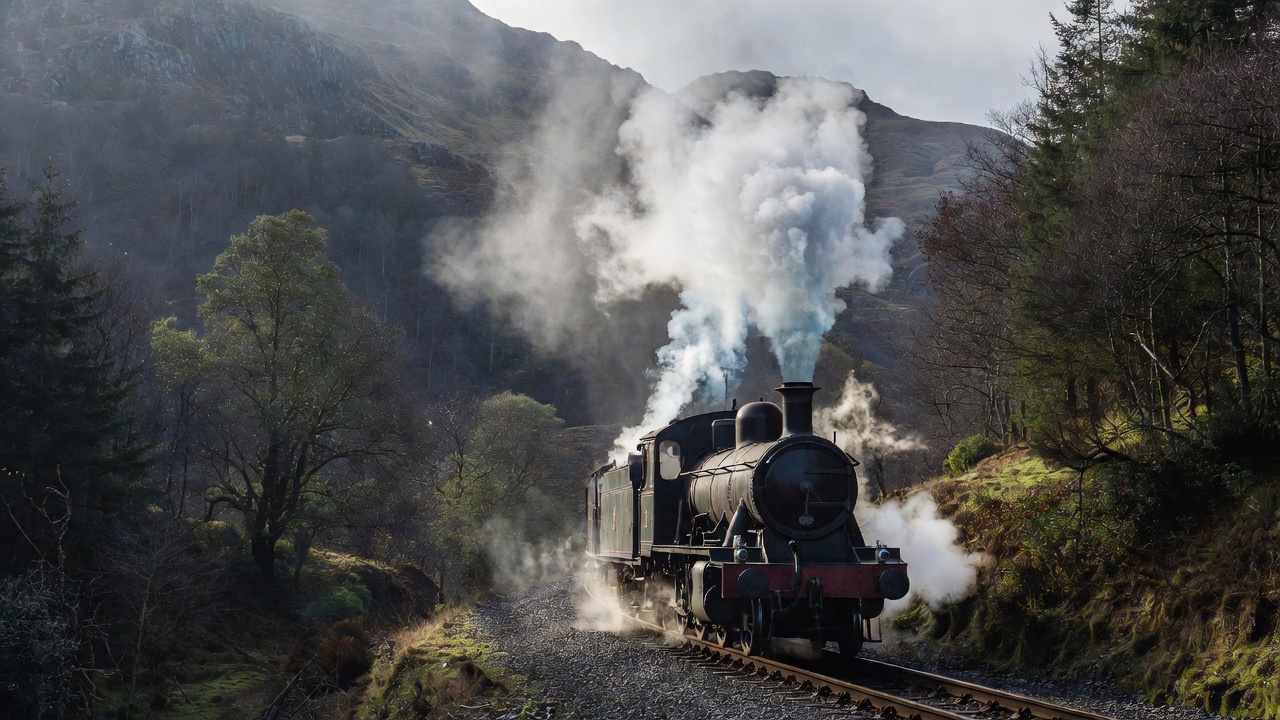
A steam locomotive can dominate the senses before it moves: warm metal, the sound of escaping pressure and the anticipation of a heavy machine beginning to work. But railway heritage is larger than the locomotive. Track gauge, workshop skills, signaling, bridges and the original traffic all help explain what survives. A scenic ride becomes more interesting when the landscape is read as a record of work.
Many celebrated heritage lines were built to move minerals, goods or people through places where roads were difficult. Their visitor appeal came later. That history should not be reduced to nostalgia. Construction and operation involved demanding labor, commercial risk and changing communities. Preservation adds another chapter, requiring maintenance, training and choices about what can realistically remain in service.
Ffestiniog: the scale of a slate railway
The Ffestiniog Railway runs between Porthmadog and Blaenau Ffestiniog in North Wales. Its narrow gauge and winding alignment reflect its origins in moving slate from the quarrying district toward the coast. Traveling inland reverses that industrial flow, bringing passengers toward the mountain setting that gave the railway its purpose. The route’s modest physical scale should not be mistaken for modest technical interest.
The railway is closely associated with Fairlie articulated steam locomotives, a distinctive response to working powerful engines around tight curves. For a traveler, this is a useful prompt to look beyond an engine’s appearance. Articulation, adhesion and weight distribution are engineering decisions. A locomotive can be both visually memorable and an answer to specific operating constraints.
- Route
- Porthmadog–Blaenau Ffestiniog
- Original context
- Slate traffic
- Look closely
- Narrow gauge and articulated locomotives
Check the railway’s current timetable for the actual journey offered, including intermediate stops and return arrangements. Special events, normal visitor services and workshop visits are separate experiences. A photograph of a favorite locomotive does not guarantee that engine will haul a particular departure; maintenance and operational needs can change the roster.
Glenfinnan: a structure on a working route
Glenfinnan Viaduct carries the West Highland railway through a sweeping curve in the Scottish Highlands. Its mass-concrete construction is an important part of its identity, even when photographs emphasize only the arches and the surrounding hills. The viaduct belongs to a wider route linking communities, not merely to the passing train most often associated with its image.
The Jacobite is a seasonal steam excursion between Fort William and Mallaig, while regular passenger services are a different product. Check current operation and booking conditions directly. A ticket for one service should never be assumed valid on another. If viewing from the landscape rather than traveling, use lawful paths and designated viewpoints, respect local access arrangements and stay off the railway.
Durango & Silverton: industry along a canyon
In Colorado, the Durango & Silverton Narrow Gauge Railroad follows the Animas River corridor into the San Juan Mountains. Its origins are tied to the mining economy of the region. The narrow-gauge alignment and canyon setting show how railways reached difficult mountain districts before the visitor journey became the principal attraction.
Different operating seasons and excursions may cover different sections of the line, and traction can vary. Wildfire conditions, weather and maintenance are practical considerations rather than minor footnotes. Confirm the precise itinerary, locomotive policy and cancellation terms. An open-sided or open-window experience may be appealing, but smoke, cinders, noise and changing temperatures can matter greatly to comfort.
Visit as a guest of a working railway
Platforms, yards and tracks are operational spaces. Follow staff instructions, remain behind barriers and never step onto a line for a photograph. Ask about step heights, boarding assistance and toilet access before reserving, because historic carriages may not offer the same arrangements as modern intercity stock. Travelers sensitive to smoke or noise should discuss suitable seating and alternatives directly with the operator.
Allow time for interpretation where it is available. A museum label, a station building or a conversation during an authorized guided visit can connect the passing scenery to its industrial past. Supporting a heritage railway means more than buying a picturesque ride; it helps sustain the expertise that makes the ride possible. That living knowledge is often the most remarkable thing on the line.
Continue with the railways themselves
Find current visitor information at the Ffestiniog & Welsh Highland Railways, West Coast Railways, ScotRail and Durango & Silverton. These sources distinguish operational services from historical descriptions.